Age Group Change – Frequently Asked Questions
Overview
What is the age group change?
Youth soccer is transitioning from a calendar birth-year model (January 1 – December 31) to a school-year–aligned birth-date model.
The new age group window is:
August 1 – July 31
Players are grouped by birth dates, not by school grade. A player’s grade in school does not determine their soccer age group.
There is a lot of mis-information going around. Teams will NOT be based on a players grade level. Teams will be organized based on a players Birth Date that is more closely aligned with the school year. Generally speaking most of the players on a team will be in the same grade, but that isn’t the determining factor for player placement.
Example of how the change will impact an age group:
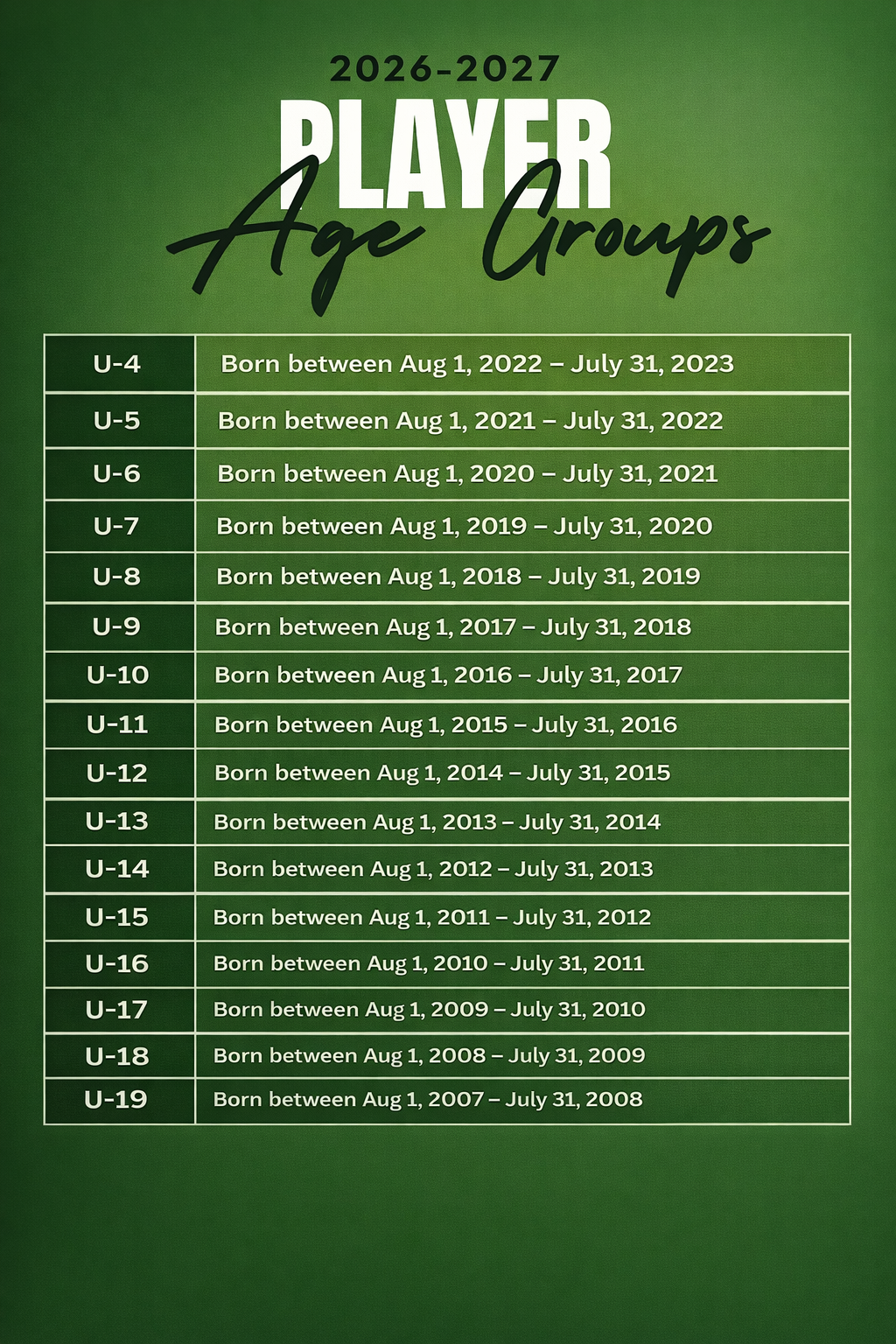
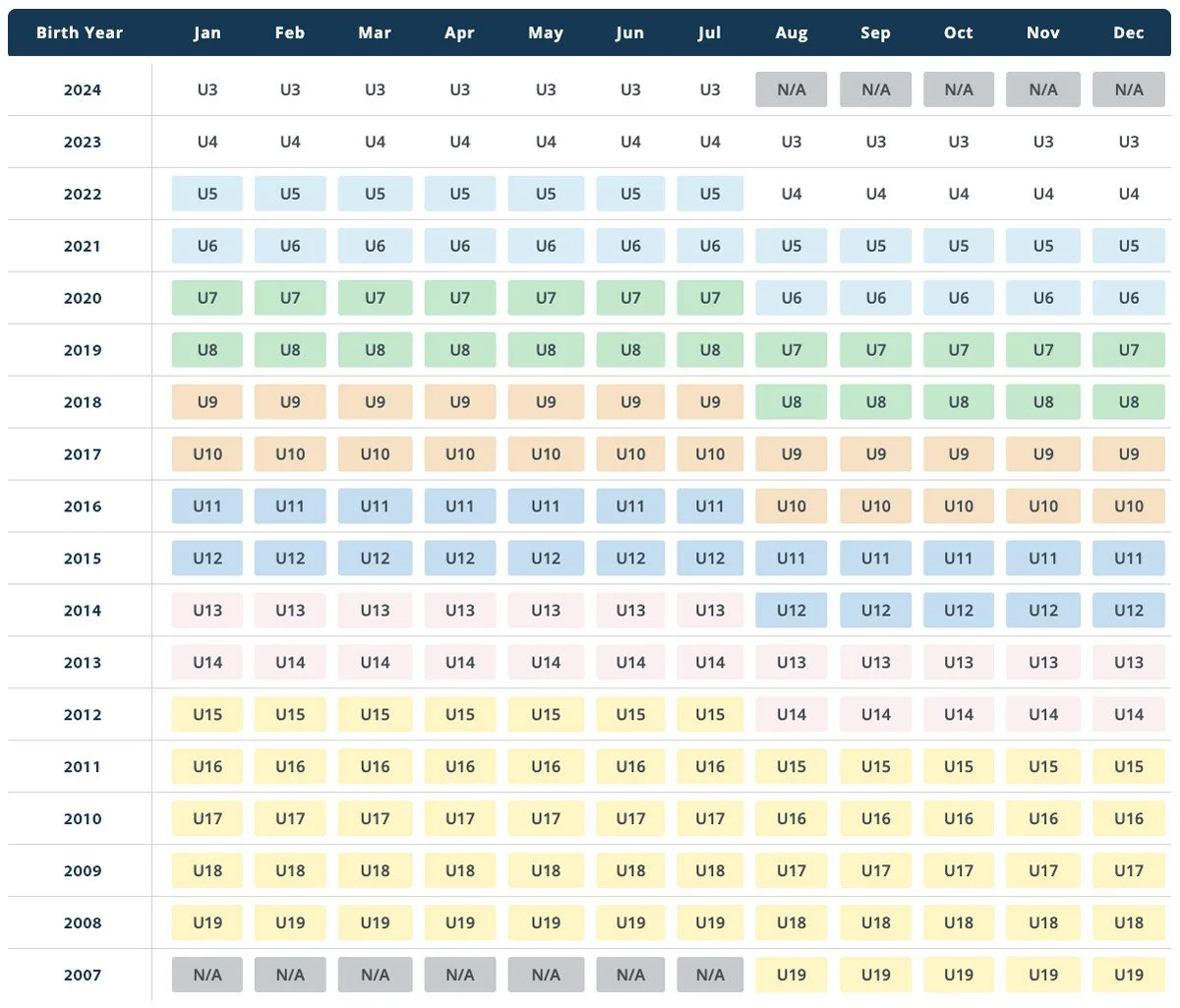
We will use the current U12 age group under the current age bracket system. These are players born in the year 2014, meaning birthdates January 1st 2014 to December 31st 2014. When the changes take effect at tryouts, the players on this sample team will align as follows: those born January 1st, 2014 to July 31st 2014 will advance to the U13 age bracket for the Fall 2026/Spring 2027 Soccer Season. Players born August 1st 2014 to December 31st 2014 will be in the U12 age bracket for the Fall 2026/Spring 2027 Soccer Season. At the bottom of this page is an age group chart that reflects the new format. Find your birthdate and you will know your age group bracket for tryouts and beyond.
Why is this change happening?
The August 1 – July 31 model is intended to:
More closely align soccer age groups with typical school-year peer groupings
Reduce long-term roster disruption
Create greater consistency across leagues and platforms
U.S. Soccer Mandated
UYSA Mandated
SWAT recognizes that while the intent is alignment, this change can still feel confusing or disruptive without proper planning.
How SWAT Is Addressing the Change
What is SWAT’s approach to the August 1 – July 31 transition?
SWAT Soccer is taking a player-first, family-supported, development-driven approach.
Our priorities are:
Long-term development over short-term results
Stability wherever possible
Individual evaluation instead of blanket movement
Clear communication and access to leadership
There is no automatic movement policy applied to all players.
What specific steps is SWAT taking?
SWAT has implemented a structured transition plan that includes:
Leadership-led guidance of all roster alignment decisions
Individual player reviews considering development, readiness, and fit
Pathway-based flexibility, allowing movement when beneficial
Intentional roster construction to limit unnecessary disruption
Parent education and direct access to decision-makers
This transition is being managed proactively to protect both the player experience and the club culture.
Who is leading this process?
Clear ownership ensures clarity and accountability:
-Director of Coaching – oversees competitive structure, team composition, and coaching alignment
-Director of Player Development – supports individual players and families through placement decisions and pathway guidance
Contacts:
Ben Munk
Director of Coaching
📧 Ben@swatsoccer.com
Ben Munk
Director of Player Development
📧 ben@swatsoccer.com
Player Placement & Team Questions
Will my child automatically move teams because of the date change?
No. Players are not automatically move teams solely because of the August 1 – July 31 cutoff.
Placement decisions consider:
Development stage
Emotional and social readiness
Competitive environment
Long-term growth
Birthdate Alignment
Each player is evaluated individually. Players cannot play down an age group but can play up an age group.
Is this about moving players “up” or “down”?
No. Placement is about fit, not labels. Players can play up an age group but they cannot play down to a younger age group.
The goal is to place players where they:
Can develop confidently
Are appropriately challenged
Feel supported and engaged
Fit within the proper age group based on their birthdate
Create complete teams
Movement within the pathway is normal and healthy.
How does this affect the SWAT player pathway?
The SWAT pathway remains a core strength during this transition:
Recreation
Academy
Competitive
Elite platforms (JPL / NPL)
The pathway provides flexibility so players can move as development, commitment, and goals evolve—especially during structural changes like this.
Tryouts & Evaluation
How will tryouts work under the new age group dates?
Tryouts remain holistic and are not based on a single session.
Evaluations include:
Technical ability
Decision-making
Coachability
Long-term development potential
Team and pathway fit
The new birth-date windows are applied administratively, not mechanically.
Will players be re-evaluated after placement?
Yes. SWAT anticipates adjustment periods and has built in opportunities to re-evaluate placements as players settle into the new structure.
Parent Support & Communication
How will SWAT communicate decisions?
Families can expect:
Clear explanations
Direct access to leadership
Honest, development-focused conversations
Questions are welcomed, and dialogue is encouraged.
Who should I contact if I have concerns or questions?
Start with your team coach. Additional support is available through:
Director of Player Development – Ben Munk Ben@swatsoccer.com - placement, pathway, and transition questions
Director of Coaching – Ben Munk Ben@swatsoccer.com - competitive structure and team alignment
SWAT leadership is committed to walking families through both the process and the reasoning behind decisions.
Final Message to Families
The August 1 – July 31 age group change is a structural adjustment, not a shift in SWAT’s values.
Our commitment remains:
Individual player development
Thoughtful decision-making
Family partnership
Long-term opportunity
Thank you for trusting SWAT Soccer to guide your player through this transition with clarity, care, and purpose.